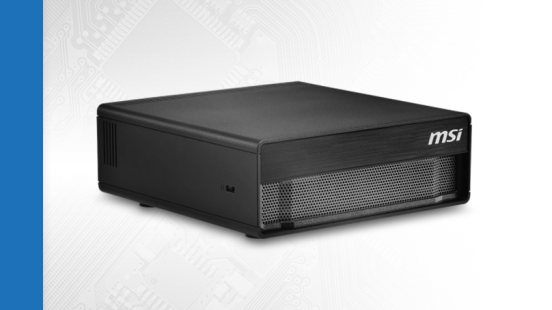
Personal AI Supercomputer Based on NVIDIA DGX Spark Platform for Deep Learning
Price from €4,092.00 Net price
Product out of stock
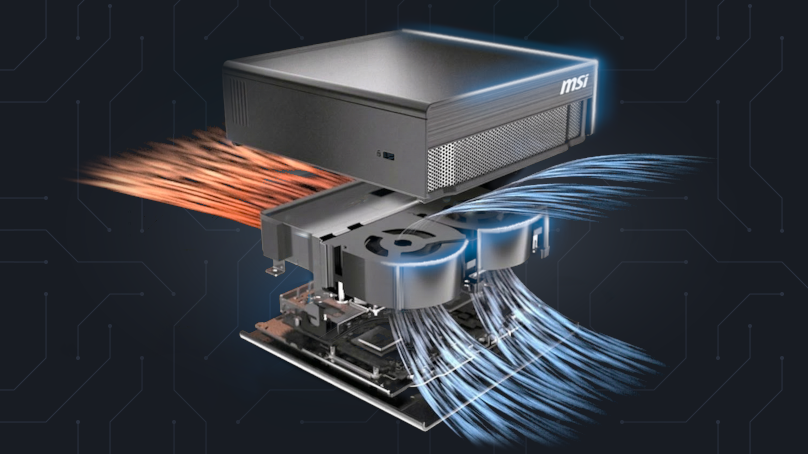

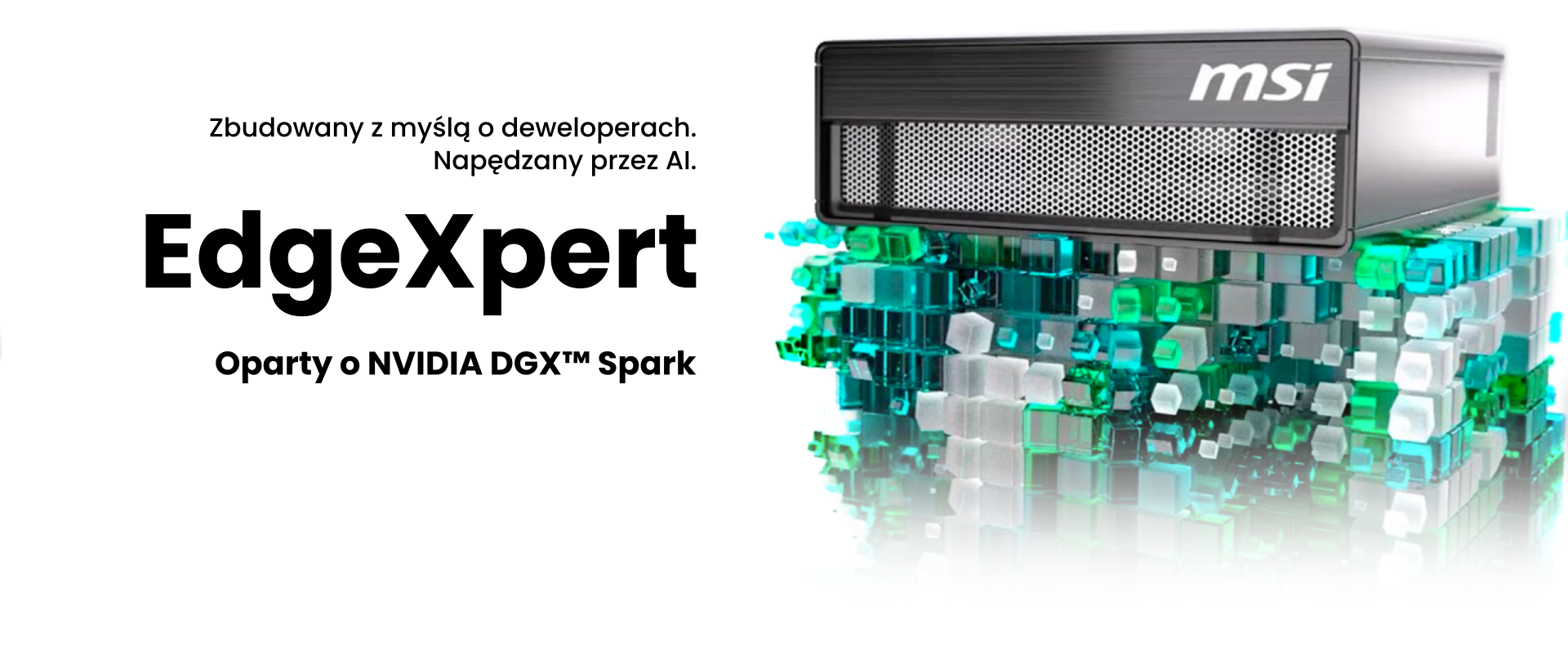
MSI EdgeXpert uses the same NVIDIA Grace Blackwell GB10 architecture as the DGX Spark. Thanks to the use of an advanced cooling system - including a high-end vapor chamber, a module with three heat pipes, large-area copper fins, and an optimized airflow design - the device is not subject to performance limitations resulting from overheating even under high load.
As a result, the measured performance in artificial intelligence tasks is about 10% higher. The temperature of the chassis, SoC, and SSD remains significantly lower than in the case of the DGX Spark, allowing the system to maintain high computing power for a longer time and ensuring more stable performance during AI model inference and training.
Go to the product page and check out our offer!
In the era of rapid development of edge computing based on artificial intelligence and increasing workloads in data centers, hardware cooling and thermal management are becoming key factors affecting the speed of AI inference.
Both MSI EdgeXpert and DGX Spark use the NVIDIA Grace Blackwell GB10 architecture. Even so, users comparing these systems often ask themselves:
why is there a performance difference of about 10% with identical architecture?
The answer lies in MSI's approach to thermal engineering, material selection, and airflow design. In the following sections, we explain how the MSI EdgeXpert system achieves higher performance with the same architecture by analyzing three key aspects: hardware design, cooling system design, and performance benchmark results.
The key technologies of the high-end vapor chamber and heat dissipation system form the foundation of the MSI EdgeXpert card's performance advantage, allowing it to maintain low temperatures under heavy load thanks to professional internal cooling components:
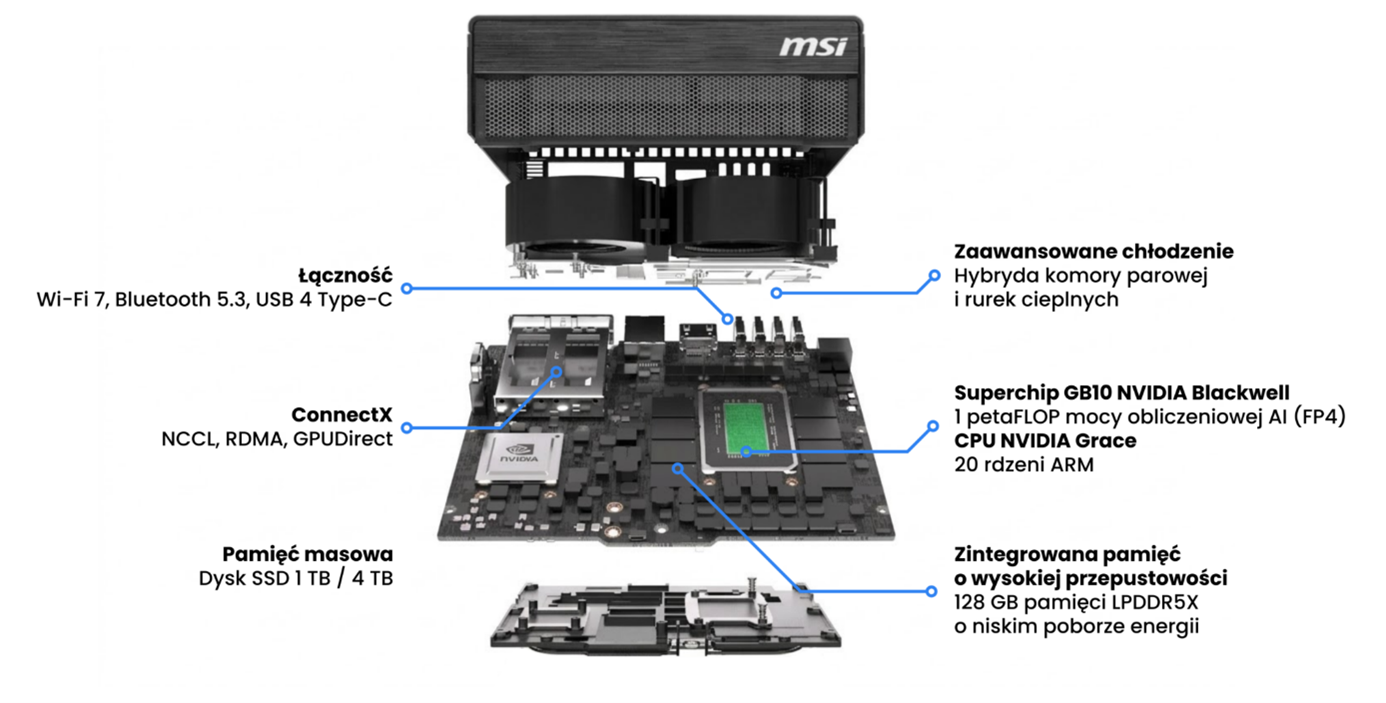
More efficient cooling module → more stable GPU clock frequencies → faster AI inference processing.
During long-term AI model inference and training tasks, the performance bottleneck is often not the computing architecture itself, but the operating temperature of the system. Therefore, in addition to using efficient copper heatsinks and a vapor chamber, the overall airflow strategy inside the device is also crucial.
The mechanical design of the MSI EdgeXpert has been crafted to maximize air circulation and reduce phenomena that cause heat accumulation. This includes several key elements:
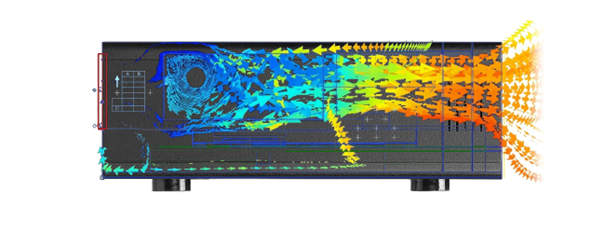
By maximizing the area of the air intakes, optimizing the hot air exhaust paths, and reducing its recirculation, the MSI EdgeXpert ensures a rapid supply of cool air to the areas of key components and more effective heat removal from the inside of the system.
This design not only increases cooling efficiency but also allows the GPU, SoC, and SSD to operate with more stable power for a longer time. As a result, the system maintains higher and more predictable performance during AI model inference and training.
Smoother airflow → system maintains higher computing power → more stable performance in AI tasks.
During the GPU stress test (Nvidia_n1x_power_stress_external-8.0), temperatures in the MSI EdgeXpert at many key points were significantly lower than in the DGX Spark FE:
| Temperature measurement point | MSI EdgeXpert Temperature | NVIDIA DGX Spark Temperature | Temperature difference (ΔT) |
|---|---|---|---|
| Chassis (rear panel) | 48.6 °C | 63.6 °C | -15 °C |
| Chassis (top part) | 41.8 °C | 50.9 °C | -9.1 °C |
| SoC (GPU stress test) | 85 °C | 86 °C | -1 °C |
| SSD (stress test) | 52 °C | 61 °C | -9 °C |
Test results indicate that the cooling design solutions and overall system optimization applied in the MSI EdgeXpert provide more effective heat dissipation than in the case of the NVIDIA DGX Spark.
Thanks to a more advanced cooling system design and optimized airflow, the MSI EdgeXpert effectively limits the thermal issues observed in the DGX Spark FE platform. As a result, the system offers higher and more stable performance in artificial intelligence tasks.
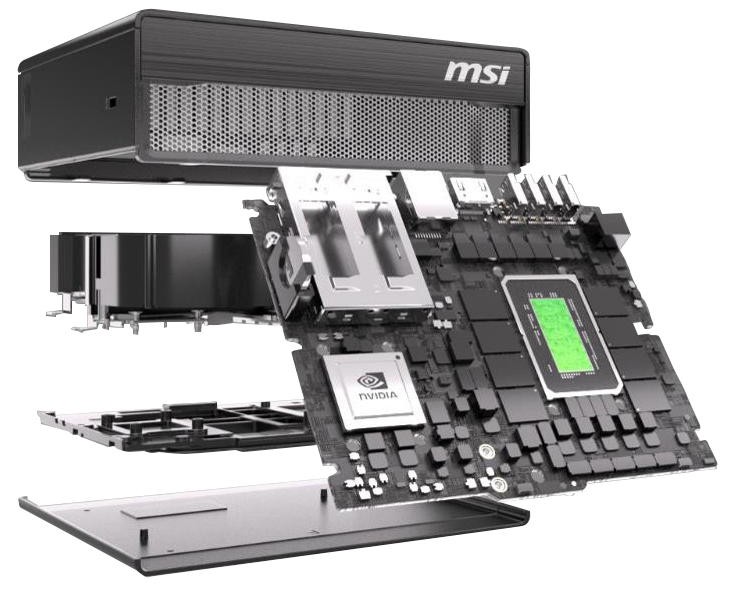
Thanks to the advanced vapor chamber design and optimized airflow management system, the MSI EdgeXpert eliminates the cooling bottlenecks present in the Spark FE model. As a result, it offers faster, more stable, and more reliable performance during prolonged AI computations under high load.
MSI EdgeXpert is particularly well suited for applications requiring stable, long-term operation under heavy load, without the risk of limitations resulting from system overheating.
The most important scenarios include:
The common denominator of these applications is the need to maintain constant, consistent performance over a long period. It is exactly with such scenarios in mind that the MSI EdgeXpert system was designed.
A significant element of this advantage is thermal engineering. For years, MSI has been developing cooling solutions for high-performance systems, using, among others, vapor chambers, high-performance heat pipes, large-area copper heatsinks, and an optimized airflow design. Thanks to this, the platform can operate at lower temperatures and maintain stable operating parameters even under prolonged computational load.
In practice, this means the ability to maintain high performance in artificial intelligence tasks – from training models to inference in production environments.
If you want to learn more about the capabilities of this platform, read our previous post dedicated to MSI EdgeXpert or check the product details in the Elmatic store.
Our experts will be happy to help you choose the right hardware configuration and design an AI infrastructure tailored to your project.
MSI EdgeXpert is just one element of a broader AI infrastructure ecosystem. Depending on the scale of the project, solutions may include workstations for AI teams, edge AI platforms analyzing data directly at the source, and GPU servers designed to support larger computing clusters.
If you want to see how modern infrastructure for AI projects is built in practice – from edge computing to server platforms – visit the knowledge center dedicated to artificial intelligence solutions in industry: https://ai.elmatic.net
Personal AI Supercomputer Based on NVIDIA DGX Spark Platform for Deep Learning